
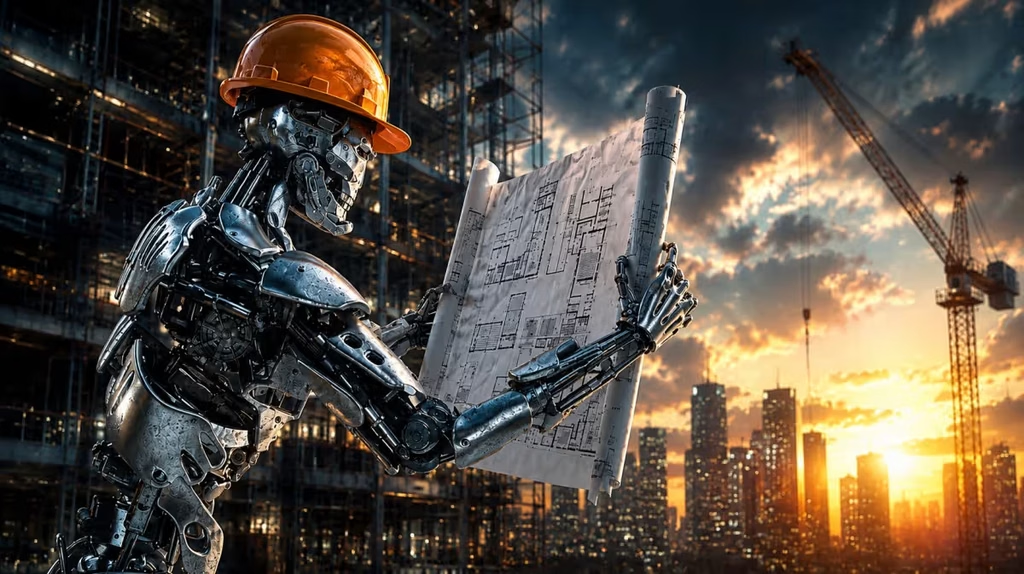
Construction has a productivity problem, and it’s a strange one when you think about it. Manufacturing has tripled its output per worker since the 1960s. Construction? Barely moved.
Same industry, same decades, wildly different results, and a big part of that gap comes down to how hard it is to automate a job site that’s different every single time.
That’s exactly the challenge robotics in construction is trying to solve. Add in a labor shortage that shows no signs of easing: the industry needs hundreds of thousands more skilled workers in the U.S. alone, and the average tradesperson keeps getting older, not younger, and it’s not hard to see why contractors are finally taking robots seriously.
Robotics in construction means using automated machines and systems to handle tasks that used to require a person to do all the physical work by hand: bricklaying, rebar tying, excavation, demolition, even 3D-printing entire walls layer by layer.
And here’s the thing that’s changed recently: this isn’t theoretical anymore. Specific robots are already working real job sites, doing real work, on a repeatable basis.
This guide walks through what robotics in construction actually looks like, the different types of robots you’ll run into, how they work, and where they’re being used right now.
What Is Robotics in Construction?
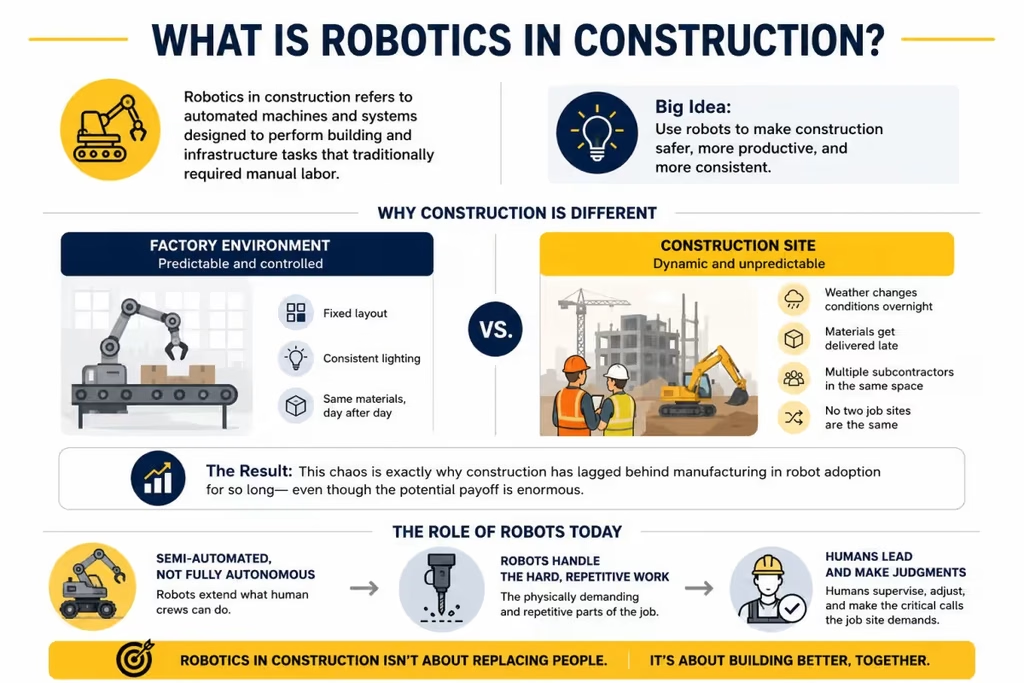
At its core, robotics in construction refers to automated machines and systems designed to perform building and infrastructure tasks that traditionally required manual labor.
That’s the simple version. If the broader field is still a bit hazy, it’s worth stepping back to what is robotics as a whole before narrowing down to how it plays out on a job site specifically.
Factory robots have it easy, relatively speaking. They work in a fixed, predictable space, same layout, same lighting, same materials, day after day. A construction site is basically the opposite of that.
No two job sites look the same, weather changes conditions overnight, materials get delivered late, and dozens of subcontractors are all moving through the same space at once.
That chaos is exactly why construction has lagged behind manufacturing in robot adoption for so long, even though the potential payoff is enormous.
Most construction robots today are semi-automated rather than fully autonomous; they extend what a human crew can do, rather than replacing the crew outright.
A robot might handle the repetitive, physically brutal part of a task while a human still supervises, adjusts, and makes the judgment calls the job site inevitably demands.
How Construction Robots Work
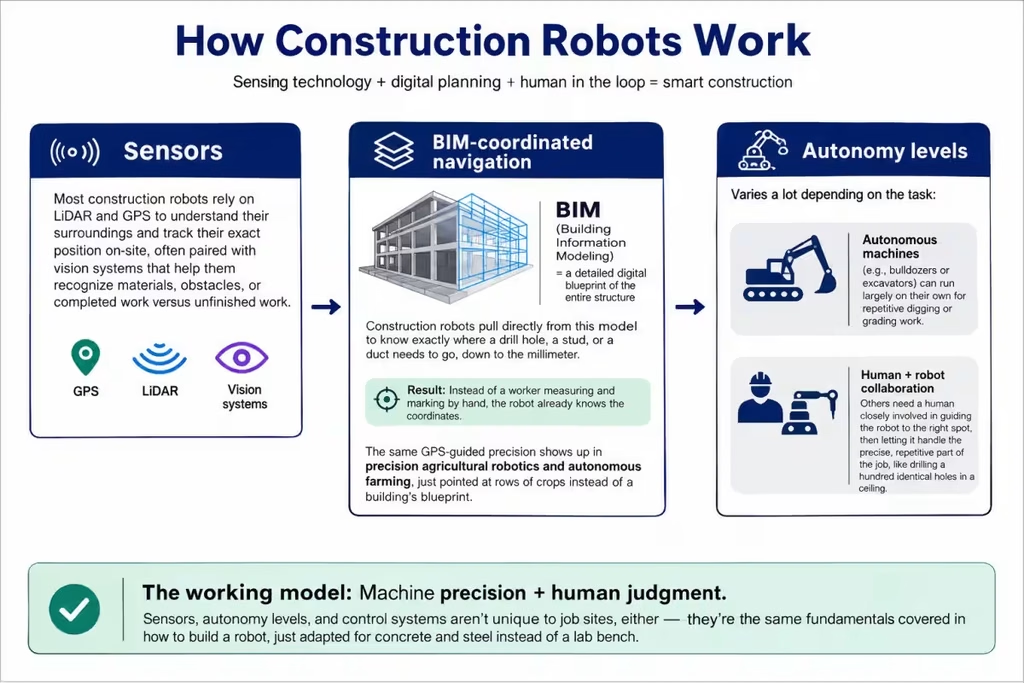
So how does a robot make sense of a job site that changes every single day? It comes down to a mix of sensing technology, digital planning, and usually a human still very much in the loop.
Sensors are the foundation. Most construction robots rely on LiDAR and GPS to understand their surroundings and track their exact position on-site, often paired with vision systems that help them recognize materials, obstacles, or completed work versus unfinished work.
BIM-coordinated navigation is where things get genuinely clever. BIM Building Information Modeling is essentially a detailed digital blueprint of the entire structure, and a lot of modern construction robots pull directly from that model to know exactly where a drill hole, a stud, or a duct needs to go, down to the millimeter.
Instead of a worker measuring and marking by hand, the robot already knows the coordinates. That same GPS-guided precision shows up in precision agricultural robotics and autonomous farming, just pointed at rows of crops instead of a building’s blueprint.
Autonomy levels vary a lot depending on the task. Some robots, like autonomous bulldozers or excavators, can run largely on their own for repetitive digging or grading work.
Others need a human closely involved in guiding the robot to the right spot, then letting it handle the precise, repetitive part of the job, like drilling a hundred identical holes in a ceiling.
That mix of machine precision plus human judgment is really the working model for most construction robots right now. The sensors, autonomy levels, and control systems involved aren’t unique to job sites, either; they’re the same fundamentals covered in how to build a robot, just adapted for concrete and steel instead of a lab bench.
Types of Construction Robots
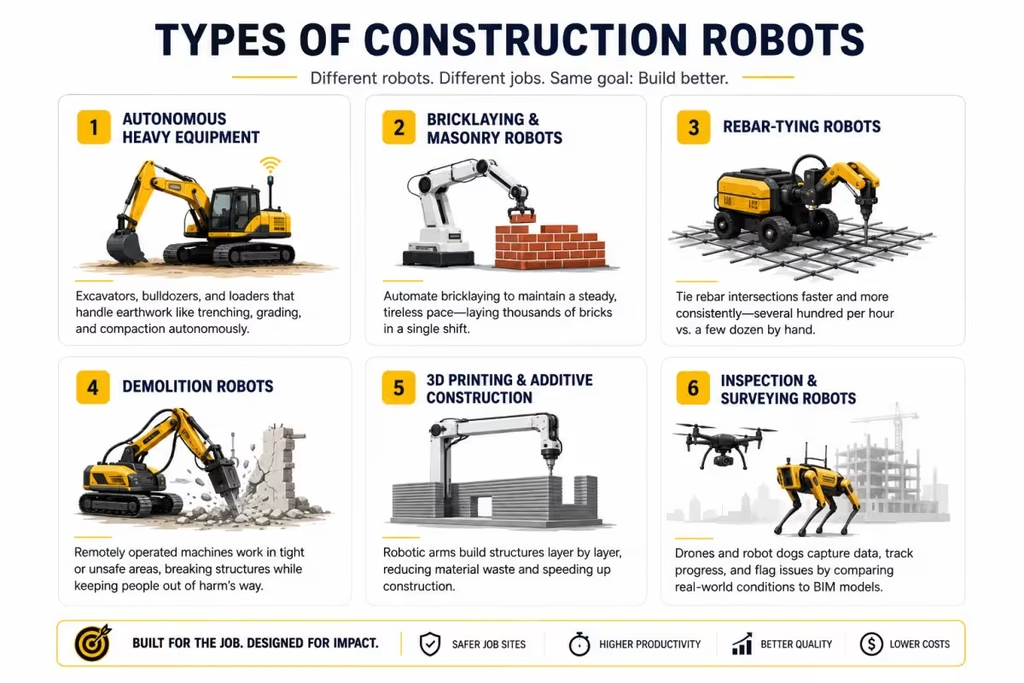
Construction robots aren’t one-size-fits-all. A robot built to tie rebar. It’s a pattern that shows up across robotics generally: the different types of robots in agriculture split along the same lines, shaped entirely by the specific job each one is built for. Here’s a breakdown of the main categories doing real work on job sites right now.
Autonomous Heavy Equipment
Excavators, bulldozers, and loaders, the heavy machinery that’s been on job sites for decades, are increasingly being retrofitted or built from the ground up for autonomous or semi-autonomous control.
These machines can handle repetitive earthwork like trenching, grading, and compaction largely on their own. It’s a similar shift to what’s already happened with autonomous mobile robots in agriculture, where machines took over the repetitive, hours-long work of covering large areas on their own.
Bricklaying & Masonry Robots
Bricklaying robots automate one of construction’s most physically punishing jobs. A human mason works hard and works well, but there’s a limit to how many bricks a person can lay in a day before fatigue sets in.
Robotic masonry systems can maintain a steady, tireless pace, laying thousands of bricks in a single shift without ever needing a break.
Rebar-Tying Robots
This is one of the clearest wins in construction robotics so far. Rebar-tying robots like TyBot handle the repetitive work of tying rebar intersections on large concrete structures, and the throughput difference is genuinely striking, with these robots tying several hundred intersections per hour compared to a few dozen for a skilled ironworker doing it by hand.
Demolition Robots
Demolition robots take on one of the most dangerous jobs on any site: tearing down structures. Compact, remotely operated demolition machines can work in tight or structurally unstable spaces that would be far too risky for a person to enter, letting an operator control the machine from a safe distance while it does the physical breaking.
3D Printing & Additive Construction
3D-printed construction is probably the flashiest category, and for good reason: watching a robotic arm build a wall layer by layer, like a giant version of a desktop 3D printer, is genuinely striking to see.
Beyond the novelty, though, additive construction can cut material waste significantly compared to traditional methods, since the robot only deposits exactly what’s needed, layer by layer, rather than cutting excess material away.
Inspection & Surveying Robots
Not every construction robot builds something; some just watch. Inspection drones and quadruped robots patrol job sites, capturing progress photos, flagging safety issues, and comparing real-world conditions against the digital BIM model.
These inspection robots are close cousins of the broader service robots category, built for the same kind of mobile, sensor-driven work in unpredictable spaces.
On-Site vs. Off-Site (Modular) Construction Robotics
Not all construction robots work where you’d expect. A good chunk of construction robotics actually happens away from the job site entirely, inside factories building components that get assembled later. Here’s how the two approaches stack up.
| On-Site Robots | Off-Site (Modular) Robots | |
|---|---|---|
| Where they work | Live construction sites | Factories and prefabrication plants |
| Environment | Unpredictable, changes daily | Controlled, consistent, factory-like |
| Common tasks | Bricklaying, rebar tying, demolition, earthwork | Timber framing, steel cutting, wall panel assembly |
| Autonomy level | Often semi-autonomous, human-supervised | Higher autonomy, closer to industrial robotics |
| Adoption stage | Growing, task-specific deployment | More mature, closer to factory robotics |
| Key advantage | Removes workers from hazardous, repetitive tasks | Scalable, predictable, faster iteration |
The honest takeaway here: off-site robots have an easier job, in a sense, because they get to work in something closer to a factory environment, the same conditions that made manufacturing robotics successful decades ago. On-site robots have the harder challenge, dealing with a site that’s never quite the same twice.
That’s exactly why off-site modular construction robotics tends to be a bit further along in adoption, while on-site robots are still working through task-specific deployments rather than broad, all-purpose automation.
Real-World Applications & Benefits
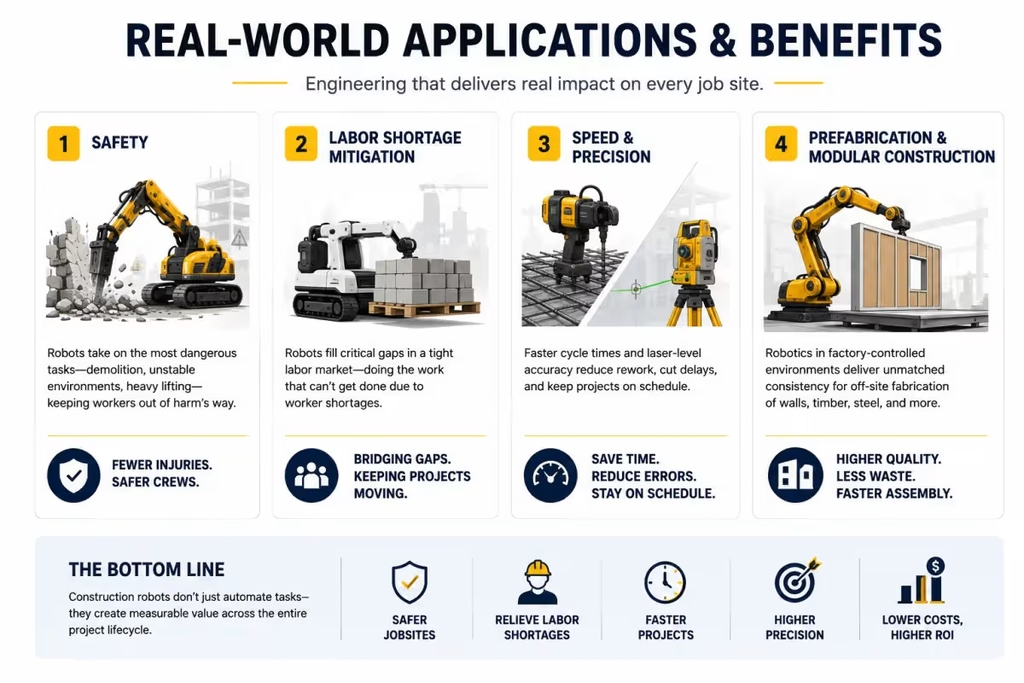
This is where the engineering translates into things that actually matter on a job site: safer crews, fewer delays, tighter budgets.
Safety is probably the single biggest benefit, and it’s not a small one. Construction remains one of the more injury-prone industries out there, and robots are increasingly handling the tasks that put workers at the most risk: demolition, work in structurally unstable spaces, and repetitive heavy lifting.
That same risk-reduction logic drives a lot of adoption in robotics in healthcare too, where robots increasingly take on tasks that would otherwise expose staff to hazards.
Labor shortage mitigation matters just as much, if not more, right now. With the industry short of several hundred thousand workers and the average tradesperson aging out faster than new workers are coming in, robots aren’t really replacing anyone in most current deployments; they’re filling gaps that were already sitting empty, doing the work nobody was available to do anyway.
Speed and precision show up clearly in the numbers. Rebar-tying robots working at several times the pace of manual tying aren’t a minor efficiency gain on a large concrete structure; that can shave real weeks off a schedule.
Layout robots marking foundations with laser precision cut out an entire category of measurement errors that used to cost time and materials to fix.
Prefabrication and modular construction benefit enormously from robotics, since factory-controlled conditions let robots work at a level of consistency that’s much harder to achieve on a live site.
Timber framing, steel cutting, and wall panel assembly increasingly happen off-site, in a robot-assisted, semi-automated process, before the finished components ever reach the job site.
Challenges in Construction Robotics
For everything robots are already doing well, construction still isn’t an easy environment to automate, and a few real obstacles explain why adoption hasn’t moved faster.
Unpredictable site conditions are the core problem, and it’s genuinely hard to overstate how much this matters. Weather shifts, materials arrive late, layouts change mid-project, and no two sites are built the same way twice.
A robot that works flawlessly on one job site can run into completely different problems on the next. It’s a similar struggle to what marine and underwater robotics deals with, where the environment itself, not the technology, ends up being the hardest part to work around.
High upfront cost keeps a lot of smaller contractors on the sidelines. Advanced construction robots aren’t cheap, and for a smaller firm working with thinner margins, justifying that investment against an uncertain return can be a genuinely tough call.
Integration with legacy workflows trips up plenty of otherwise promising deployments. A robot that pulls data from a BIM model only works well if the rest of the project is actually using BIM consistently, and a lot of construction firms are still catching up on that digital foundation.
The trained-operator gap is easy to overlook but genuinely limits adoption. These robots aren’t plug-and-play; someone needs to understand how to set them up, calibrate them for each new task, and troubleshoot when something goes wrong. That kind of specialized knowledge is still in short supply across the industry.
The Future of Robotics in Construction
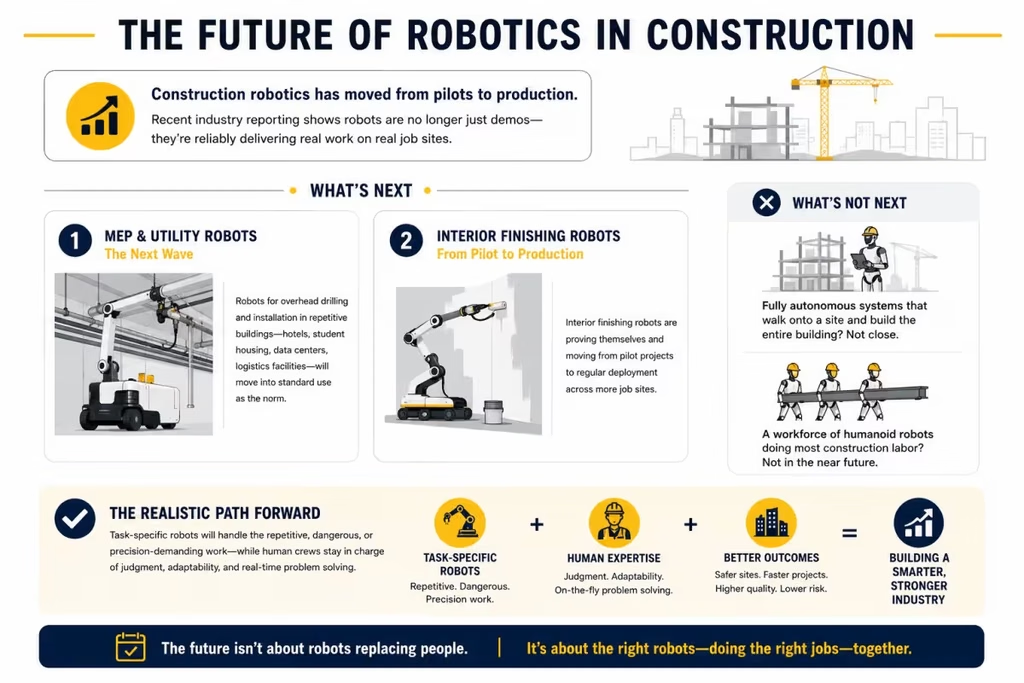
Here’s what’s genuinely different about where construction robotics stands right now compared to just a couple of years ago: it’s stopped being a pilot technology.
Recent industry reporting points to construction robotics moving from scattered test projects to repeatable, real-world production deployments, with specific robots doing specific jobs reliably on real sites, not just in demo videos.
MEP and utility robots are a clear next wave. In repetitive building types, hotels, student housing, data centers, logistics facilities, robots that handle overhead drilling and installation work are expected to move further into standard use over the next couple of years, since those buildings repeat the same room layouts hundreds of times, which is exactly the kind of repetitive, predictable pattern robots handle best.
Interior finishing robots are following a similar path, moving from pilot programs toward more regular deployment as the technology proves itself.
That shift from pilot project to reliable production tool has already played out elsewhere in robotics, including with ocean-monitoring robots that quietly went from experimental to essential for climate research.
Fully autonomous, walk-onto-a-site-and-build-the-building systems aren’t close, and neither is a workforce of humanoid robots doing the bulk of construction labor.
The realistic path forward looks more like what’s already happening: task-specific robots handling the repetitive, dangerous, or precision-demanding pieces of the job, while human crews stay firmly in charge of everything that requires judgment, adaptability, and the on-the-fly problem-solving no robot has matched yet.
Wrapping Up
Robotics in construction has quietly moved past the “someday” stage. Rebar-tying robots are already outpacing manual crews by a wide margin. Bricklaying robots are laying thousands of bricks a shift without a break.
Demolition robots are taking on the jobs too dangerous to send a person into. None of this replaces the construction workforce; it’s filling gaps in an industry that badly needs the help, while keeping people out of harm’s way on the tasks that used to put them most at risk.
Given how fast adoption has accelerated just in the past year or two, this is a corner of robotics that’s only going to become more common on job sites, not less.
1. What’s the difference between robotics in construction and industrial robotics?
Industrial robots work in fixed, controlled factory settings, repeating the same task over and over. Construction robots operate in unpredictable, constantly changing job sites with different layouts, weather, and materials every time, which makes them a genuinely different engineering challenge, even though the underlying technology overlaps quite a bit.
2. Are construction robots replacing construction workers?
Not in any meaningful way right now. The construction industry is short hundreds of thousands of workers, and most current robot deployments are filling gaps left by that shortage rather than displacing existing crews. Robots tend to take on the repetitive or dangerous parts of a job while human workers stay in charge of judgment calls and problem-solving.
3. What is the most widely used type of construction robot today?
Autonomous heavy equipment excavators, bulldozers, and loaders retrofitted or built for semi-autonomous grading and earthwork have the broadest adoption, largely because it builds on machinery contractors already use. Rebar-tying robots have also seen fast real-world adoption on bridge and highway projects specifically.
4. How much does a construction robot cost?
It varies enormously depending on the type and task, from smaller demolition robots to large rebar-tying systems, and pricing isn’t always public since a lot of these robots are leased or contracted through their manufacturer rather than sold outright. Cost remains one of the bigger adoption barriers for smaller contractors.
5. Is 3D-printed construction the same thing as robotics in construction?
3D printing is one specific category within the broader field, not the whole thing. It uses a robotic arm or gantry system to build structures layer by layer, but robotics in construction also covers bricklaying, demolition, rebar tying, inspection, and heavy equipment automation. 3D printing just gets the most media attention because it’s visually striking.
6. Do construction robots require special training to operate?
Yes, generally. Unlike a personal service robot you’d just switch on, professional construction robots need someone to set them up, calibrate them for each new task, and troubleshoot issues on-site. That trained-operator gap is actually one of the bigger barriers slowing wider adoption right now.